
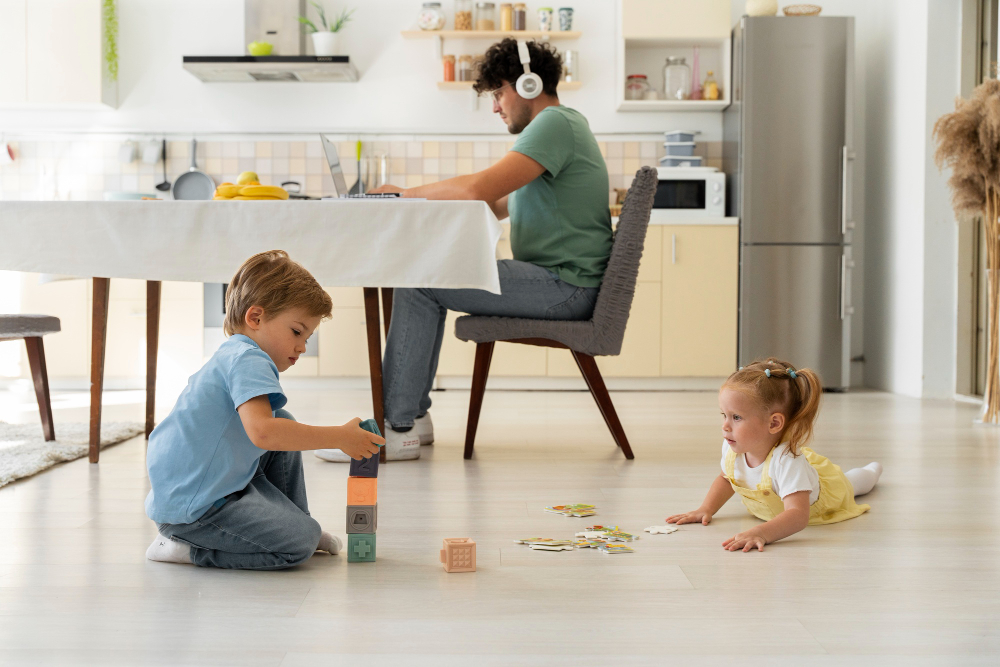
In the fast-paced hum of London life, we’ve been conditioned to believe that a “good” weekend is a busy one. We rush from Mandarin classes in Marylebone to Saturday morning gymnastics in Greenwich, our calendars a mosaic of pre-booked blocks and expensive tuition. We do it because we love our children; we want to give them every possible advantage in a competitive world.
But in March 2026, a quiet revolution is taking place in living rooms across the city. Parents are putting down the schedules and doing something radical: nothing.
At Maxxi Childcare, we are seeing a significant shift toward Intentional Boredom. Rather than viewing an empty Sunday afternoon as a gap to be filled, parents are treating it as a sacred space for “unstructured play.” Here is why “I’m bored” might just be the most important thing your child says this week.
The Science of the “Idle Mind”
When we overschedule children, we provide them with constant external stimulation. They become excellent at following instructions, but they don’t practice the internal “muscle” of initiation.
Scientific research into early childhood development suggests that when a child is bored, their brain doesn’t actually shut down. Instead, it enters the Default Mode Network. This is where the brain begins to make cross-connections, processes emotions, and—most importantly—searches for its own entertainment. This search is the literal birth of creativity.
Why Unstructured Play is the Ultimate Teacher
When a child is left to their own devices (without a screen in sight), they gain three critical life skills that no “class” can truly teach:
- Creative Resourcefulness In a world of “done-for-you” entertainment, boredom is a call to action. A cardboard box becomes a spaceship; a pile of cushions becomes a treacherous mountain range. This is divergent thinking in its purest form—the ability to see one object and imagine a hundred different uses for it.
- Emotional Regulation and Grit Boredom can be uncomfortable. For a toddler or a preschooler, that “empty” feeling can initially cause frustration. By allowing them to sit with that feeling rather than immediately “fixing” it with an iPad or a planned activity, you are teaching them self-regulation. They learn that they have the power to change their own internal state.
- Autonomy and Agency In a nursery-aged child’s life, so much is decided for them. Intentional boredom gives them back the “driver’s seat.” When they decide to spend an hour lining up their toy cars by color or building a “fairy house” in the garden, they are practicing agency—the belief that they can impact the world around them through their own choices.
How to Practice Intentional Boredom (Without Losing Your Mind)
Transitioning from a high-stimulation schedule to intentional boredom can be a bit bumpy. Here are three ways to make it work in a London household:
- The “Slow-Release” Morning: Start your Saturday with no plans until lunch. Resist the urge to suggest an activity. Let the toys stay in their baskets and see what your child gravitates toward when they realize “the entertainment” isn’t coming from you.
- The “Yes” to Mess: Unstructured play is often messy. Whether it’s a blanket fort that takes up the entire lounge or a “potion” made of water and fallen leaves, try to embrace the chaos. The mess is evidence of a brain at work.
- Curate “Analog” Environments: Swap battery-operated toys that “do things” for open-ended materials. Blocks, silks, clay, and even safe kitchen utensils provide a blank canvas for a child’s imagination.
The Maxxi Childcare Philosophy
At Maxxi Childcare, we don’t just “mind” children; we nurture their innate ability to wonder. We incorporate “quiet periods” into our daily rhythm where the only objective is to exist in a space of possibility. We’ve watched as the children who are allowed to be “bored” become the most focused, the most collaborative, and the most innovative problem-solvers in the room.
This March, we invite you to take one thing off your calendar. Leave a gap. Let the “boredom” set in. You’ll be amazed at the brilliant, creative little person who emerges from the quiet.